
 EN
EN



Evaluate the Quality Management System of the Supplier Manufacturing Vacuum Cleaners
Review the ISO 9001 Certification and Internal Audit History
Review the manufacturer’s ISO 9001 certification, as it is one of the most reputable certifications in the industry. Pay attention to the frequency of their internal audits and how their corrective action reports address issues. Reliable suppliers have internal audits and corrective actions completed on the same issues within the specified time frame 95% of the time or greater. Extend your review beyond the certification to include actual independent audit reports, as they are more indicative of compliance than the certifications.
Assess the protocols for traceability of suppliers and sourcing of components.
The documentation systems like QR codes or RFID tags allow us to know how far along components and parts are in the testing process and where they come from. To evaluate new suppliers, companies receiver systems, and processes to ensure that they have robust documentation for each batch of materials supplied. Quality centric manufacturers have an incoming inspection pass rate that exceeds 98%, which demonstrates their commitment to quality. This level of quality control ensures that the end product contains only high quality components and materials. This ensures that vacuum suction power, air filter function, and the safety of electrical components are of the highest quality.
Evaluate In-Process Inspection Frequency and Defect Escalation Workflow
Evaluating statistical process control is appropriate for any point within assembly where assembly fails. This might include things like improperly aligned motors, improperly sealed components, and brushroll assembly with excessive torque. Manufacturers reduce the number of defects leaving the factory by two-thirds when they inspect every twenty boxes, even when that inspection is not a part of the final inspection. The standard operating procedure should include stopping production if there is a serious issue, such as electrical failures or thermal cut-off failures. Someone should document the problems and corrective actions within two days. The faster problems are stopped, the better they are contained so that they don't propagate throughout an entire production batch.
Prototype Functional Testing: Suction, Filtration, Noise, and Run-Time
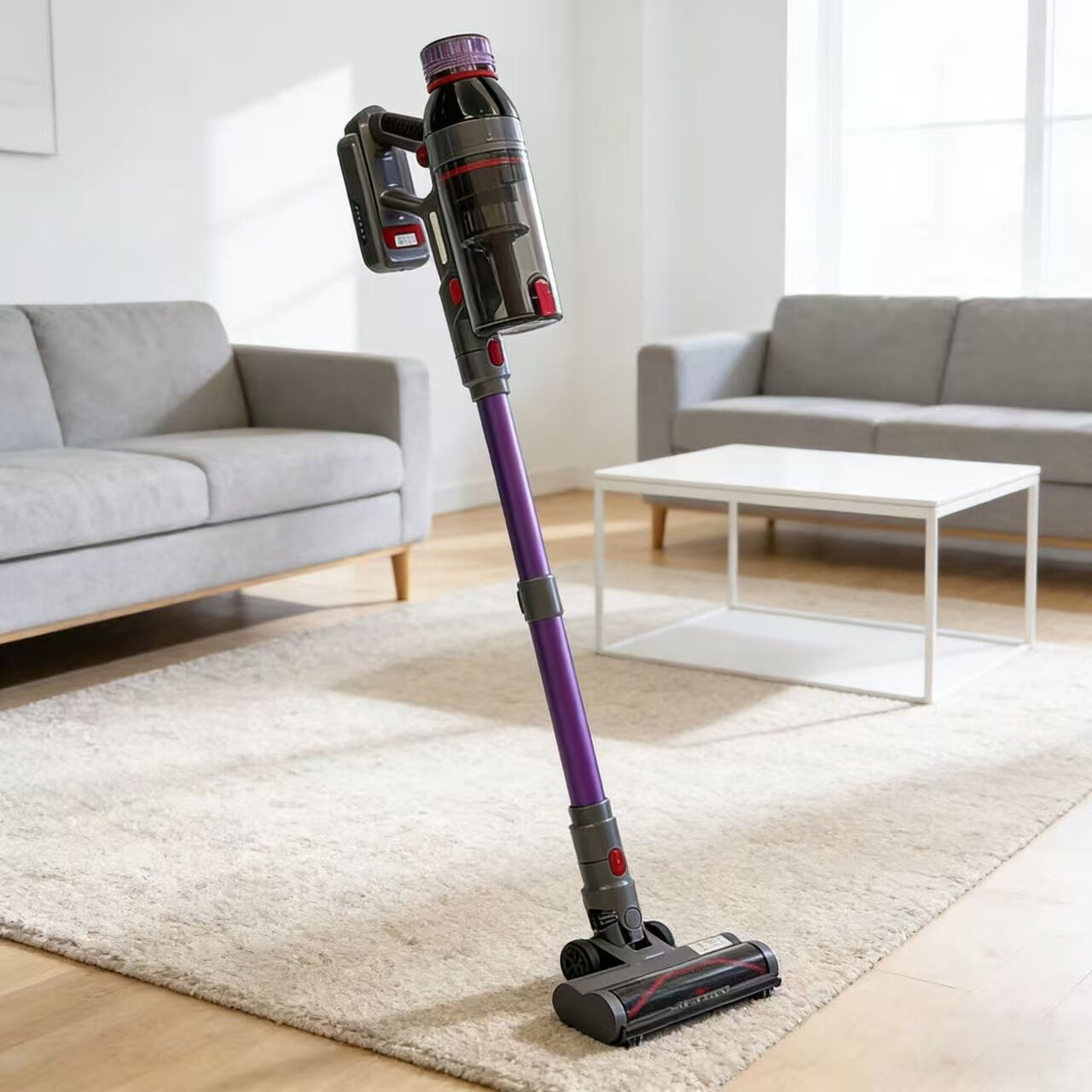
Proper testing of these prototype units is necessary prior to going into full-scale manufacturing. For suction testing, air flow must be constant, and tested above and below a variety of floor types, including both carpet and hardwood. This involves measuring air particles as defined in the IEC 62885-4 standard. For noise testing, sample collection must be done at the operational height, in accordance with ISO 3744. Most home models should not exceed 70 decibels and the noise level must be measured and documented. Most home models also should not exceed 70 decibels and noise levels must be documented during continuous operation. Running these prototypes in heavy use will also help isolate possible issues with overheating components, battery life, or mechanical weaknesses. Issues will also help expose disqualifying problems like motors overheating, or components seizing during testing. All issues will be documented to inform the engineering team, and aftermarket support will be available during operational use. Consumer Reports documented almost half of home models launche. fifthi models launched in the US marketplace. - the feet models tha are on the market today. Commercial fixtures in home models should not exceed 70 decibels and noise levels must be documented during continuous operation.Require Third-Party Certifications: EMC, Safety (IEC 60335), and Energy Efficiency
Compliance to claims is never acceptable. Demands of internationally recognized certifications from third parties is required.
- EMC (FCC Part 15 / EU EMC Directive) - guarantees that motors and circuitry will not interfere with Wi-Fi, smart home gadgets, and even medical devices.
- Safety per IEC 60335-2-69 recognizes the particular dangers of vacuums with respect to cord entrapment, pinching of nozzles, and overheating due to blockage.
- Energy Efficiency Labelling (ENERGY STAR® and EU Ecodesign) requires testing in accordance with IEC 62885-4 that demonstrates the relationship between power consumption and cleaning efficiency.
Considered collectively, the aforementioned certifications reduce legal exposure and open up new markets; compliant appliances are subjected to approximately 23% higher rates of customs holds (Global Trade Review, 2024).
Implement Structured Inline and End-of-Line QC Control During Mass Manufacturing
Utilize AQL Sampling (ISO 2859-1 Level II) and Provide Each Batch with a Clear Accept/Reject Guideline
Incorporate inline inspection during assembly, especially on critical operations such as motor assembly, sealing of filter housings, and routing of wire harnesses, and identify potential discrepancies prior to final assembly. For end-of-line audits, apply ISO 2859-1 Level II with a sufficient sample size to allow a statistically valid pass/fail decision.
Critical defect (live/exposed parts, thermal cutoff absent): AQL 0.1%
Major defect (suction loss ≤15%, filter bypass, absent battery, etc.): AQL 1.0%
Minor defect (defective/harmful labels, labels out of alignment, etc.): AQL 2.5%
Establish clear and stringent criteria for a critical component (e.g., smoke test filter HEPA integrity; brush roll test - under load brush roll must rotate). For rejected lots, perform and document root-cause analysis with management of change (MoC) in-line with a corrective and preventive action (CAPA) to reduce rework costs by 27% in relation to approaches relying on final inspection alone.
Develop Continuous Improvement & Corrective Action Protocols in Collaboration with Others
Define Accountability examples with Timelines for Root Cause Analysis, CAPA, and Vacuum Cleaner Manufacturer(s)
Be explicit with timelines for your actions. For critical issues, wrap up root cause analyses in two days, and for minor issues, do this within five business days. For the CAPA documents, state what measures were taken to contain the issue, then show how the solutions worked (consider piloting here). For measures to contain recurrence, include updated SOPs, records of new training, and a concise updated inspection checklist. The contract between parties should state who is accountable for timely implementation of changes, approvals, and evidence of real improvements to the system instead of patch work. Those companies that adopted this RCA and CAPA approach structurally, reported a 63% decline in recurring defects (Quality Progress, 2023). Additionally, these guidelines provide a basis for suppliers to begin their continuous improvement in their activities.
FREQUENTLY ASKED QUESTIONS
What does ISO 9001 certification mean for vacuum cleaner manufacturers?
ISO 9001 certification involves international standards for quality management systems and customer satisfaction.
How does prototype testing help ensure that appliances do not fail after launch?
Prototype testing reduces the chances of failures.
What is the value of 3rd party certifications?
3rd party certifications help ensure compliance with the EMC, safety and energy efficiency standards. They also reduce the likelihood of being non-compliant and increase the ability to sell products.