
 EN
EN



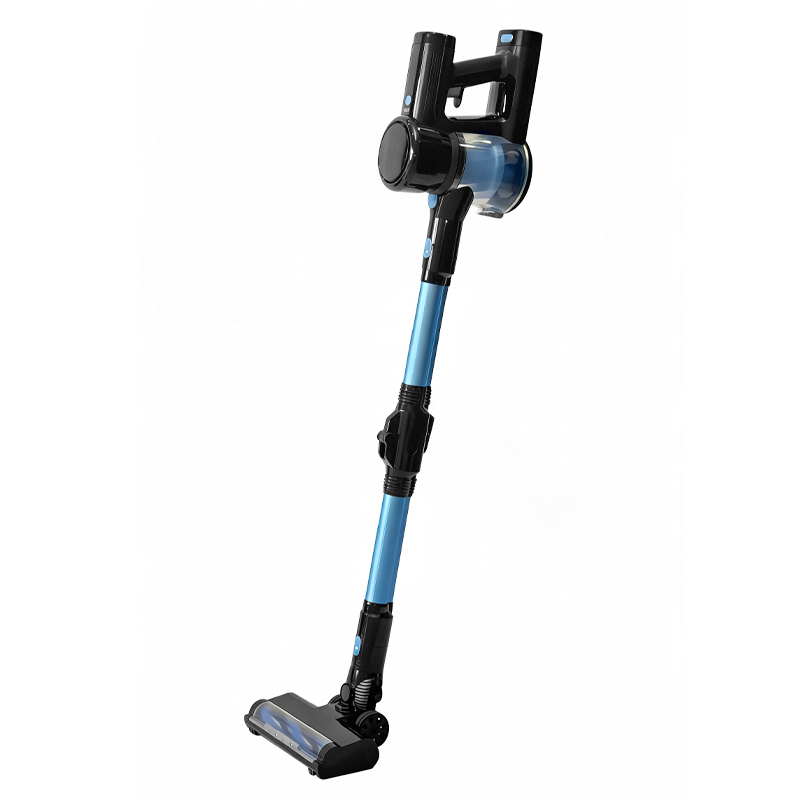
Ask ten people what "battery life" means on a cordless stick vacuum, and eight of them will describe how long it runs before needing a recharge. Ask a product engineer the same question, and the answer shifts to cycle count, capacity retention curves, and calendar aging. Both definitions matter. A vacuum that runs for 60 minutes today but drops to 18 minutes after 12 months is not the same product. Understanding what determines both dimensions of battery life — runtime per charge and total usable lifespan — separates a purchase that underwhelms from one that performs consistently over years of daily use.
Defining Battery Life — Runtime vs. Lifespan Are Not the Same Thing
What "Battery Life" Actually Means in Real-World Use
Runtime is the easier number to grasp: it is the minutes a cordless stick vacuum operates on a fully charged battery under specified conditions. Most manufacturers quote runtime on the lowest power setting — Eco mode — because the number looks impressive. A machine rated at 60 minutes on Eco may deliver 12 minutes on Boost, and that lower figure is rarely what appears in a product listing. The test conditions also assume a clean filter, room-temperature ambient air, and a new battery at peak capacity. Real homes with pet hair, fine dust, and varying floor surfaces push those numbers downward.
Lifespan is the deeper metric. Lithium-ion cells degrade with every charge-discharge cycle. After roughly 300 to 500 full equivalent cycles, a typical consumer-grade pack retains 70 to 80 percent of its original capacity. For a household running the vacuum every other day, that translates to roughly two to three years before runtime becomes noticeably shorter. The degradation is gradual — a minute or two lost per month — which is why many users do not notice the decline until the vacuum cannot finish a full cleaning session.
Why Battery Performance Declines Over Time
Inside every lithium-ion cell, a thin passivation layer called the solid electrolyte interphase (SEI) forms during the first charge. That layer is essential — it protects the anode from continuous reaction with the electrolyte. But the SEI does not stop growing. With every cycle, it thickens slightly, consuming trace amounts of active lithium that can no longer contribute to energy storage. This is the primary driver of capacity fade. Calendar aging runs in parallel: even a battery sitting unused at full charge loses capacity over time, accelerated by elevated temperature. A pack stored at 40 degrees Celsius degrades roughly twice as fast as one kept at 25 degrees. For a cordless model left on its charging dock in a sunlit utility room, both cycle aging and thermal aging work against longevity simultaneously.
The Engineering Behind Cordless Vacuum Battery Life
Cell Chemistry and Form Factors — 18650, 21700, and Pouch Cells
The battery pack inside a cordless stick vacuum is not one monolithic unit but a series-connected assembly of individual cylindrical cells or pouch cells. The 18650 format — 18 mm diameter, 65 mm length — has been the industry workhorse for over a decade. A quality 18650 from Samsung, LG, or Panasonic stores between 2,500 and 3,500 mAh at a nominal 3.6 volts. The newer 21700 cell, with its 21 mm diameter and 70 mm length, pushes capacity to 4,000 to 5,000 mAh in a physically larger but more energy-dense package. A six-cell 21700 pack at 25.2 volts nominal delivers noticeably more watt-hours than a six-cell 18650 pack at the same voltage, which translates directly to longer runtime at equivalent power draw.
Pouch cells offer a third path. Their flat, flexible form factor allows designers to pack energy into irregularly shaped handle or body cavities that cylindrical cells cannot fill. The trade-off is mechanical vulnerability: pouch cells swell slightly with age, and without a rigid steel can to contain that expansion, pack design must accommodate dimensional change over the product lifetime.
Voltage Architecture and Power Delivery
These devices cluster around three voltage platforms: 18 volts (5 cells in series), 22.2 volts (6 cells), and 25.2 volts (7 cells). Higher voltage is not automatically better, but it does enable a design choice that matters for battery life. A brushless DC motor delivers a given mechanical power output with lower current draw when supplied at higher voltage, because power equals voltage multiplied by current. Lower current means less resistive heating in the cells, less voltage sag under load, and less thermal stress on the electrolyte. That is why a 25.2-volt cordless stick vacuum with a well-matched motor can sustain usable suction deeper into the discharge curve than an 18-volt design pushing higher current through the same cell configuration.
The discharge rate also interacts with cell chemistry. High-drain cells — often labeled with a "VTC" or "25R" suffix in Samsung nomenclature — sacrifice some energy density for the ability to deliver 15 to 20 amps continuously without overheating. A vacuum that draws 25 amps from a pack built with 10-amp-rated cells will see voltage sag that triggers the BMS low-voltage cutoff prematurely, leaving usable capacity stranded in the cells.
Battery Management System — The Silent Guardian of Longevity
The battery management system sits between the cells and the outside world, and its quality directly determines how many useful years a pack delivers. A competent BMS performs four functions simultaneously. It prevents overcharge by cutting off charging current when any cell reaches 4.2 volts. It prevents over-discharge by shutting down output when any cell drops below approximately 2.8 volts — a critical protection because draining a lithium-ion cell below its minimum voltage permanently damages the anode structure. It monitors pack temperature through one or more thermistors and throttles or shuts down if internal temperature exceeds a safe threshold, typically 60 to 70 degrees Celsius. And it performs cell balancing, bleeding small amounts of charge from the highest-voltage cells to keep all cells within a few millivolts of each other. Without active balancing, the weakest cell in the series string determines the usable capacity of the entire pack.
A poorly designed BMS skips active balancing, uses a single temperature sensor where three would be appropriate, or sets cutoff thresholds too conservatively — protecting the battery at the cost of leaving 10 to 15 percent of nameplate capacity permanently inaccessible. That gap between nameplate watt-hours and usable watt-hours is invisible on a spec sheet and only reveals itself through shorter-than-expected runtime.
What Separates a 7-Minute Battery from a 60-Minute Battery
Raw Capacity vs. Usable Energy — The Marketing Gap
Spec sheets quote total energy in watt-hours: a 6-cell Samsung 50E 21700 pack stores roughly 111 watt-hours. That is the theoretical ceiling. Usable energy is smaller. The BMS cutoff voltage, the motor controller's minimum operating voltage, and the power mode selected all carve into the available pool. On Eco mode, with a light motor load and minimal voltage sag, a pack might deliver 95 percent of its rated energy. On Boost, drawing maximum current, voltage sag triggers the cutoff early, and usable energy may drop to 65 percent of rated capacity. The same pack in the same unit can behave like two different batteries depending solely on which button the user presses.
Motor Efficiency — Where Power Meets Endurance
The evolution from brushed universal motors to digitally commutated brushless motors represents the single largest efficiency gain in portable vacuum design. A brushed motor converts roughly 50 to 60 percent of input electrical power into mechanical output; the rest dissipates as brush friction heat and winding resistance. A well-designed brushless motor reaches 80 to 85 percent efficiency across a broad operating range. For a 300-watt power budget, the brushed motor wastes 120 to 150 watts as heat; the brushless motor wastes 45 to 60 watts. That 90-watt difference goes directly into extended runtime — roughly 30 percent more cleaning time from the same battery pack. The compounding effect matters: lower waste heat reduces thermal stress on the cells, which in turn slows the chemical degradation that erodes long-term capacity.
Real-World Battery Longevity — A Procurement Manager's Case Study
Case Background — A European Retailer's Product Line Evaluation
A European home appliance brand sourcing cordless stick vacuum products from multiple OEM suppliers in China faced a recurring complaint pattern. Customer reviews for one SKU — a mid-tier model positioned at a competitive retail price point — showed a disproportionate number of one-star ratings citing "battery dead after 6 months." The SKU in question used a 6-cell 18650 pack from a second-tier cell manufacturer, rated at 2,200 mAh per cell, with a basic BMS providing overcharge and over-discharge protection but no active balancing. The competing SKU from a different supplier, using Samsung 50E 21700 cells with an actively balanced BMS, showed battery-related return rates approximately one-fifth as high, despite being positioned at a 12 percent higher retail price.
Testing Protocol and Findings
The brand's quality team commissioned accelerated cycle-life testing on both packs following a protocol adapted from IEC 61960: 1C charge to 4.2 volts per cell, 2C discharge to 2.8 volts cutoff, continuous cycling at 25 degrees Celsius ambient. After 300 cycles, the Samsung-based pack retained 87 percent of initial capacity. The second-tier pack retained 64 percent. At 500 cycles — roughly 18 months of daily use — the gap widened to 82 percent versus 51 percent. The root cause was not just cell quality but the absence of balancing: in the second-tier pack, individual cell voltages diverged by up to 180 millivolts after 200 cycles, causing the BMS to cut off based on the weakest cell while the strongest cells still held charge.
Specification and Supplier Decisions That Followed
The procurement team revised the bill of materials for the next production run. The updated specification mandated first-tier cylindrical cells — Samsung, LG, or Panasonic — with documented batch traceability, and an actively balanced BMS with a minimum of two thermistors. The unit cost increased by approximately 240,000 BOM increase — offset by an estimated $380,000 reduction in after-sales claims, return logistics, and brand-damage customer support costs within the first year alone. The lesson was clear: battery specification is not a place to extract marginal cost savings.
Maximizing Battery Life — Practical Guidance for Buyers and End Users
Charging Habits That Extend Cell Longevity
Lithium-ion cells age slowest when kept between 20 and 80 percent state of charge. Charging to 100 percent before every use is convenient but chemically stressful: the higher the terminal voltage, the faster the electrolyte oxidizes and the SEI layer thickens. For a unit used daily, charging fully overnight is a practical necessity, and the degradation is factored into the product design life. But for a vacuum used once a week — common in smaller households — leaving the pack at 100 percent on the dock between sessions accelerates calendar aging unnecessarily. A charger that allows a storage-charge mode, holding the pack at roughly 60 percent, extends calendar life meaningfully for low-usage scenarios. Temperature control matters equally. Charging a pack that is still hot from heavy use — above approximately 35 degrees Celsius internal temperature — accelerates chemical degradation. A well-engineered charger pauses charging until pack temperature drops into a safe window.
What to Look for in Battery Specifications When Evaluating a Cordless Unit
For procurement professionals and technically minded buyers, the battery specification is a checklist, not a single number. Cell origin comes first: a pack built with Samsung 50E, LG M50LT, or Panasonic NCR21700 cells carries a known performance baseline with publicly available datasheets. A pack listing "high-capacity lithium cells" without manufacturer traceability is a red flag. Next, verify the BMS feature set: active balancing, multi-point temperature sensing, and documented charge/discharge cutoff thresholds. Physically inspect the pack design: is the battery removable or permanently integrated into the handle? A removable pack costs slightly more to manufacture but allows the user to swap in a fresh battery when the original degrades, effectively doubling the product's functional life without requiring a complete vacuum replacement. For suppliers serving markets with temperate and tropical climates — from Northern Europe to Southeast Asia — thermal management in the pack design becomes a differentiating factor that directly affects field return rates.
Frequently Asked Questions
What is the average battery life of a cordless stick vacuum on a single charge?
On Eco or low-power mode, a top-tier model typically delivers 40 to 70 minutes. On the maximum suction setting, runtime drops to 8 to 15 minutes. The gap between modes reflects the nonlinear relationship between motor power and current draw — doubling power more than doubles current, rapidly depleting available energy.
How many years does a cordless model battery typically last?
A quality lithium-ion pack in daily-use conditions retains usable capacity for approximately 3 to 5 years. This corresponds to roughly 400 to 600 full equivalent cycles before capacity drops below 70 percent of the original rating. Packs stored in hot environments or kept perpetually at full charge degrade faster.
Why does my cordless vacuum battery drain faster in max power mode?
Maximum power mode draws current at the pack's peak discharge rate. Higher current increases internal resistive losses inside the cells, converting more energy to heat rather than motor output. The BMS also triggers low-voltage cutoff earlier because voltage sag under heavy load reaches the minimum threshold while residual capacity remains.
Can a cordless stick vacuum battery be replaced when it wears out?
On most modern models with a removable battery design, yes — the pack clicks out and a replacement clicks in. Models with permanently integrated batteries require disassembly and soldering, which voids safety certifications and carries electrical risk. Buyers planning for long-term use should prioritize a tool-free removable battery design.
Does leaving the vacuum on the charger damage the battery?
A well-designed charger stops delivering current once the pack reaches full charge, preventing overcharge damage. However, holding a lithium-ion cell at 4.2 volts continuously still accelerates calendar aging compared to storing it at a partial state of charge. For infrequent users, unplugging the dock after charging is the better long-term practice.
How do 21700 cells compare to 18650 cells in cordless vacuums?
The 21700 format stores approximately 40 to 60 percent more energy per cell than an 18650 at a similar discharge rating. A vacuum built with 21700 cells achieves longer runtime without increasing pack size or weight proportionally. The format also supports higher continuous discharge currents, reducing voltage sag under heavy loads.
What is the difference between a 22.2V and 25.2V battery pack?
The voltage indicates the number of lithium-ion cells connected in series. A 22.2-volt pack uses six cells in series (6S configuration); a 25.2-volt pack uses seven (7S). The higher-voltage pack stores more total energy and, all else equal, draws lower current for the same motor power output, reducing resistive heating and extending cell life.
Do battery-powered stick vacuums lose suction as the battery drains?
Quality models with a regulated motor controller maintain constant suction across most of the discharge curve by increasing current draw as voltage drops. Budget models without regulation show a steady decline in suction as the battery depletes. The difference is noticeable when cleaning heavy debris toward the end of a session.
Choosing a Reliable Cordless Cleaning Appliance Partner
The battery inside a cordless vacuum represents roughly 25 to 35 percent of the product's bill of materials — and an even larger share of the user experience. A brand's reputation for reliability lives or dies on how its battery packs perform across years of daily cycles, in hot laundry rooms and cold storage closets, through hundreds of charge-and-discharge repetitions. That reality makes the choice of manufacturing partner a strategic decision, not a transactional one.
Texous brings focused engineering depth to cordless cleaning appliances, with dedicated R&D and production capabilities for vacuum cleaners, steam cleaners, and floor washers operating from a modern manufacturing base in Ningbo, Zhejiang. The company's OEM and ODM model means battery specification becomes a collaborative process — cell selection, BMS configuration, pack integration, and thermal management are tailored to the target market's usage patterns and cost structure rather than locked into one fixed template. Production quality is supported by ISO-certified management systems, and the technical team works directly with buyers to validate battery performance against real-world usage profiles — not just laboratory benchmarks.
For brands and distributors evaluating cordless vacuum suppliers, the battery conversation should happen early and in detail. Cell sourcing transparency, BMS design documentation, cycle-life test data, and physical pack construction all deserve the same scrutiny as suction power and filtration efficiency. Texous approaches that conversation with engineering-backed answers and production-tested consistency — because the real-world value of any cordless stick vacuum is determined not by suction specs alone, but by whether the energy system delivers consistent performance across hundreds of charge cycles.
Table of Contents
- Defining Battery Life — Runtime vs. Lifespan Are Not the Same Thing
- The Engineering Behind Cordless Vacuum Battery Life
- What Separates a 7-Minute Battery from a 60-Minute Battery
- Real-World Battery Longevity — A Procurement Manager's Case Study
- Maximizing Battery Life — Practical Guidance for Buyers and End Users
- Choosing a Reliable Cordless Cleaning Appliance Partner