
 EN
EN



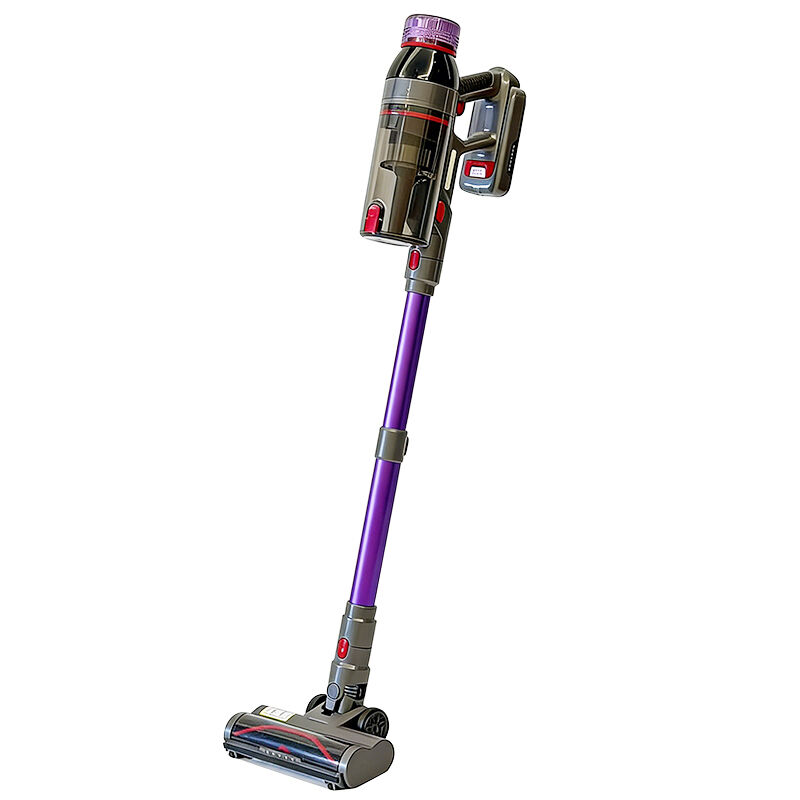
Mechanical Agitation and Fluid Dynamics
Agitation Mechanics and Anti Tangle Roller Engineering
Tackling animal fur in a residential living space requires looking past simple suction numbers to analyze the mechanical interaction between the floor nozzle and floor textiles. Pet hair possesses a high electrostatic charge, causing individual fibers to cling tightly to carpet matrixes and upholstered surfaces. A standard household vacuum cleaner often fails here because the collection mechanism relies on basic passive suction or primitive straight-bristle brush bars. When long pet fur wraps tightly around a standard roller, it chokes mechanical rotation and strains the drive belt. Advanced floor floorhead engineering resolves this physical limitation by introducing specialized anti-tangle brush rolls. These designs feature conical roller shapes, helical rubber flaps, and integrated combing ribs that continuously guide captured strands toward the center of the suction path. This precise mechanical design prevents structural wrapping and ensures smooth, continuous debris collection without requiring manual cleaning intervention.
Airflow Kinetics and Suction Air Watt Configurations
The physical removal of deep-seated pet dander and fine undercoat fur requires optimized airflow kinetics within the vacuum chamber. According to the test parameters established in IEC 62885, consistent pet hair pickup depends on maintaining high static pressure combined with large airflow volume, a ratio expressed as air watts. When dense animal fur enters the intake path, it creates immediate aerodynamic resistance. If the internal motor configuration relies on low-efficiency brushed motors, the system suffers a rapid drop in static pressure, leaving fine dander trapped deep within the carpet backing. Premium vacuum architectures utilize high-torque digital brushless motors that automatically adjust rotational speeds when encountering airflow resistance. This constant kinetic adjustments keep velocity levels uniform throughout the air path, pulling heavy debris out of deep fibers and moving it smoothly into the primary separation system.
Aerosol Containment and Structural Separation
Cyclonic Separation Mechanics and Dander Filtration
Managing pet hair presents a severe challenge to internal filtration components, as fine animal dander and microscopic skin flakes can rapidly clog porous filter materials. Relying solely on a primary pleated filter leads to airflow blockages and major motor strain. High-tier floor care appliances overcome this by using multi-cyclonic separation chambers. Air enters these specialized vortex cones at a tangent, generating immense centrifugal forces that accelerate dense debris outward against the chamber walls. This kinetic action forces heavy hair strands and coarse dirt down into the collection bin before the air stream ever reaches the delicate filtration media. Minimizing physical contact between fine dust particles and the filter fibers protects the system from airflow drop-offs, extending the active lifecycle of the filtration material.
Sealing Integrity and Micro Allergen Retention Standards
Achieving true environmental sanitation in a home with multiple pets requires a perfectly sealed filtration system capable of trapping microscopic pet allergens. High-performance household vacuum cleaner manufacturing must comply with strict international standards, such as ASTM F1977 for determining filtration efficiency. A common vulnerability in standard cleaning appliances is structural bypass leakage, where micro-dander escapes through tiny gaps in the plastic housing joints before passing through the filter. Resolving this engineering flaw requires a completely sealed system utilizing rubber gaskets and tongue-and-groove compression locks along every physical seam of the air path. This structural discipline ensures that 99.97% of particulates down to 0.3 microns remain permanently trapped inside the machine, preventing the redistribution of secondary indoor pollutants into the immediate breathing zone.
Industrial Sourcing and Manufacturing Excellence
Quality Metrics for High Capacity Appliance Procurement
Procurement managers and global consumer brands face intricate challenges when selecting reliable manufacturing partners for floor care products. A robust evaluation framework requires deep technical auditing that extends beyond aesthetic product presentations. Professional technical buyers closely analyze the component traceability of the lithium-ion cells used in battery packs, the precision balancing of the fan impeller blades, and the wall thickness of the injection-molded components. Engineering teams look for production partners who implement automated ultrasonic welding for plastic parts and utilize electronic automated balancing machines to detect microscopic imbalances in rotating components. This thorough industrial vetting guarantees that the mechanical assemblies can withstand repeated kinetic impacts, maintaining their structural integrity over years of intensive residential usage.
Mass Production Competence and Global Supply Infrastructure
Executing complex aerodynamic designs and high-precision appliance fabrication at scale requires an industrial collaborator with extensive manufacturing facilities and robust B2B supply chain fluency. This level of technical execution and structural reliability is what defines established industry specialists like Texous. By operating advanced injection molding centers and utilizing rigorous electro-mechanical stress-testing protocols, Texous ensures that every household vacuum cleaner assembly achieves the exact physical tolerances and particulate retention metrics required for demanding global distribution. The corporate infrastructure supports large-scale international logistics, providing global distributors and consumer electronics brands with a highly dependable source of verified appliance assets designed to support modern home wellness applications across international borders.
Frequently Asked Questions
Why does pet hair cause traditional vacuum brush rollers to fail?
Pet hair possesses high tensile strength and elasticity. When drawn into a standard rotating brush bar, the long strands wrap tightly around the cylinder, binding the bristles and creating immense mechanical resistance that can burn out drive belts and stall the motor.
What is the advantage of a sealed system over standard HEPA filters?
A standard HEPA filter only cleans the air that passes directly through it. If a vacuum cleaner lacks a completely sealed housing, the internal air pressure will force microscopic pet dander and dust out through tiny gaps in the plastic seams, bypassing the filter entirely and escaping back into the room.
How do multi cyclonic systems maintain suction when vacuuming animal fur?
Multi-cyclonic systems use centrifugal force to spin heavy pet hair and large debris out of the moving air stream and drop them directly into the dust bin. This prevents the fur from reaching the physical filters, keeping the airflow path completely clear and maintaining strong suction.