
 EN
EN



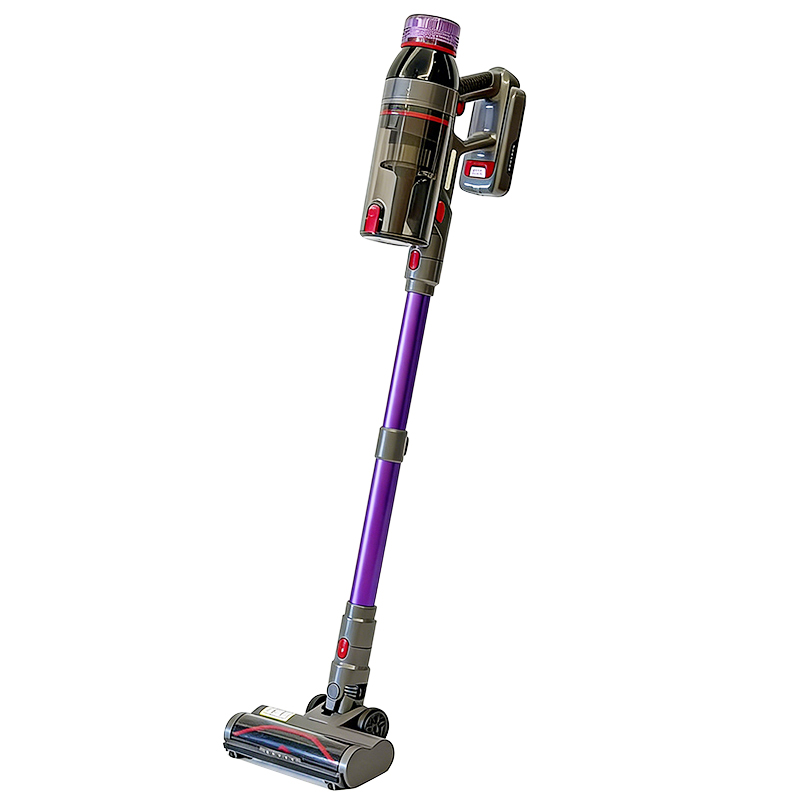
Battery Runtime vs. Usable Cleaning Time
The longest wireless working time spec — 50, 60, even 70 minutes on a single charge — appears on product specification sheets as a primary marketing number. The number that matters for actual cleaning is half that figure: the runtime on the medium or auto power setting where actual floor and upholstery cleaning occurs. A handheld vacuum achieving 50 minutes on eco mode with barely perceptible suction might deliver only 12–15 minutes on the high-power setting that provides adequate debris pickup on carpet.
The runtime gap between eco and max power is physics, not marketing deception. A brushless DC motor's power consumption scales roughly with the cube of rotational speed — doubling the speed requires eight times the power. A 2200mAh lithium-ion battery pack at 21.6V stores approximately 47.5 watt-hours of energy. On eco mode (approximately 40W draw), the pack delivers 50–60 minutes. On max mode (approximately 180W draw), the same pack delivers 12–15 minutes. The battery chemistry hasn't changed; the power demand has quadrupled.
A residential cleaning company equipping teams for move-out services evaluated handheld vacuum runtime across five models before standardizing on 40+ minute medium-power units. The key insight: the vacuum must complete the average 25–35 minute cleaning job on a single charge. Units delivering 30 minutes or less required mid-job recharging, adding 10–15 minutes of non-productive time per job. The 40-minute threshold eliminated this downtime and paid for the battery premium within approximately 3 months.
Battery Technology and Runtime Factors
Lithium-Ion Cell Configurations
Wireless handheld vacuum runtime is determined by three factors: battery cell count and capacity, motor efficiency, and the power mode selected by the user. A 6-cell battery pack using 2,600mAh 18650 lithium-ion cells in a 6S1P configuration (six cells in series, one parallel) delivers 21.6V nominal voltage and approximately 56 watt-hours of energy. The same pack in a 7S1P configuration delivers 25.2V and the same 56 watt-hours — higher voltage but identical total energy.
Battery capacity degrades with charge cycles. After 300–500 full charge-discharge cycles — approximately 2–3 years of daily use — lithium-ion cells typically retain 70–80% of original capacity. The user notices this as shorter runtime rather than sudden failure. The degradation is gradual enough that users adapt cleaning routines to the diminishing capacity until the runtime becomes noticeably insufficient.
The practical significance of battery capacity for purchasing decisions: a 2,600mAh 6-cell pack provides sufficient capacity for apartments and smaller homes when used on medium power. Larger homes and extended cleaning sessions benefit from the recent generation of 2,500–3,000mAh high-density cells that extend runtime by 15–25% without increasing battery weight. The industry trend toward pouch-type lithium-polymer cells increases energy density further at modestly higher cost per watt-hour.
Motor Efficiency's Runtime Impact
BLDC (brushless DC) motors extend usable runtime through two mechanisms beyond their higher electrical efficiency. First, the electronic speed controller maintains target motor speed as battery voltage sags during discharge — a brushed motor simply slows down, delivering less suction as the battery depletes. The BLDC controller increases current draw to maintain speed, keeping suction consistent until the voltage drops below the controller's minimum threshold.
Second, BLDC motors generate less waste heat. A brushed motor at 50% efficiency converts half the battery energy to heat. A BLDC motor at 75% converts one-quarter. The 25% efficiency difference translates to 33% longer runtime from the same battery pack.
Filter Condition Effects
A clogged filter increases motor workload — the motor draws more current to maintain speed against increased airflow resistance. Runtime loss from a dirty filter can exceed 20–30% — 40-minute runtime dropping to 28–32 minutes — without the user realizing any power mode change occurred.
Frequently Asked Questions
What is the longest real-world runtime for a cordless handheld vacuum?
On eco/low power: 50–70 minutes from high-capacity battery packs. On medium/auto power: 25–40 minutes. On max/boost: 8–18 minutes. The eco figure is for light debris on hard floors; medium is the practical cleaning mode. Texous AW1 delivers 50 min low / 30 min medium / 15 min high from a 2,200mAh pack.
How does battery size affect handheld vacuum runtime?
Battery capacity in watt-hours (voltage × amp-hours) determines total stored energy. A 47Wh pack (21.6V × 2,200mAh) supports 50 min at 56W average draw. Higher capacity at 56–65Wh extends runtime 15–25%. Runtime improvement is proportional to capacity increase for the same motor and power setting.
Do all handheld vacuums lose suction as the battery drains?
Brushed motor vacuums lose suction progressively as battery voltage drops — approximately 15–25% suction reduction from full charge to 20% remaining. BLDC motor vacuums with regulated speed control maintain consistent suction until the battery reaches the controller's low-voltage cutoff point, typically at 5–10% remaining capacity.
How many years does a handheld vacuum battery last?
2–3 years of daily use before capacity drops to 70–80% of original. Lighter use extends this timeline. Battery capacity degradation is gradual — users notice progressively shorter runtime rather than sudden failure. Replacement batteries cost 30–80 and restore original runtime. Texous designs battery packs for user-replaceable service.
Can I extend battery life by charging differently?
Lithium-ion cells last longest when kept between 20–80% charge and stored at room temperature. Full discharges to 0% and storage at full charge in high-temperature environments accelerate capacity loss. Practical advice: charge after use but unplug once full, and avoid leaving the vacuum on the charger continuously for days.
What difference does motor type make for wireless runtime?
BLDC motors extend runtime 25–40% compared to brushed motors at equivalent suction by converting more battery energy to mechanical output and less to waste heat. The electronic speed control maintains consistent suction as the battery discharges. Brushed motors lose suction progressively and are less efficient at all operating points.