 ×
×
The application of vacuum technology has expanded significantly beyond traditional household cleaning, evolving into a versatile solution tailored to diverse global market needs. From smart homes to industrial workplaces, from sterile medical facilities to mobile automotive detailing services, modern vacuums are redefining efficiency, safety, and convenience across sectors. Understanding these varied application scenarios is not just a matter of product knowledge—it is a strategic imperative for B2B suppliers, distributors, and retailers aiming to select the right product specifications, align with target market demands, and gain a competitive edge in a rapidly growing industry. Below is a detailed exploration of the key sectors where modern vacuums excel, along with the critical product features that drive success in each.
Residential and Smart Homes: The Largest and Most Dynamic Segment
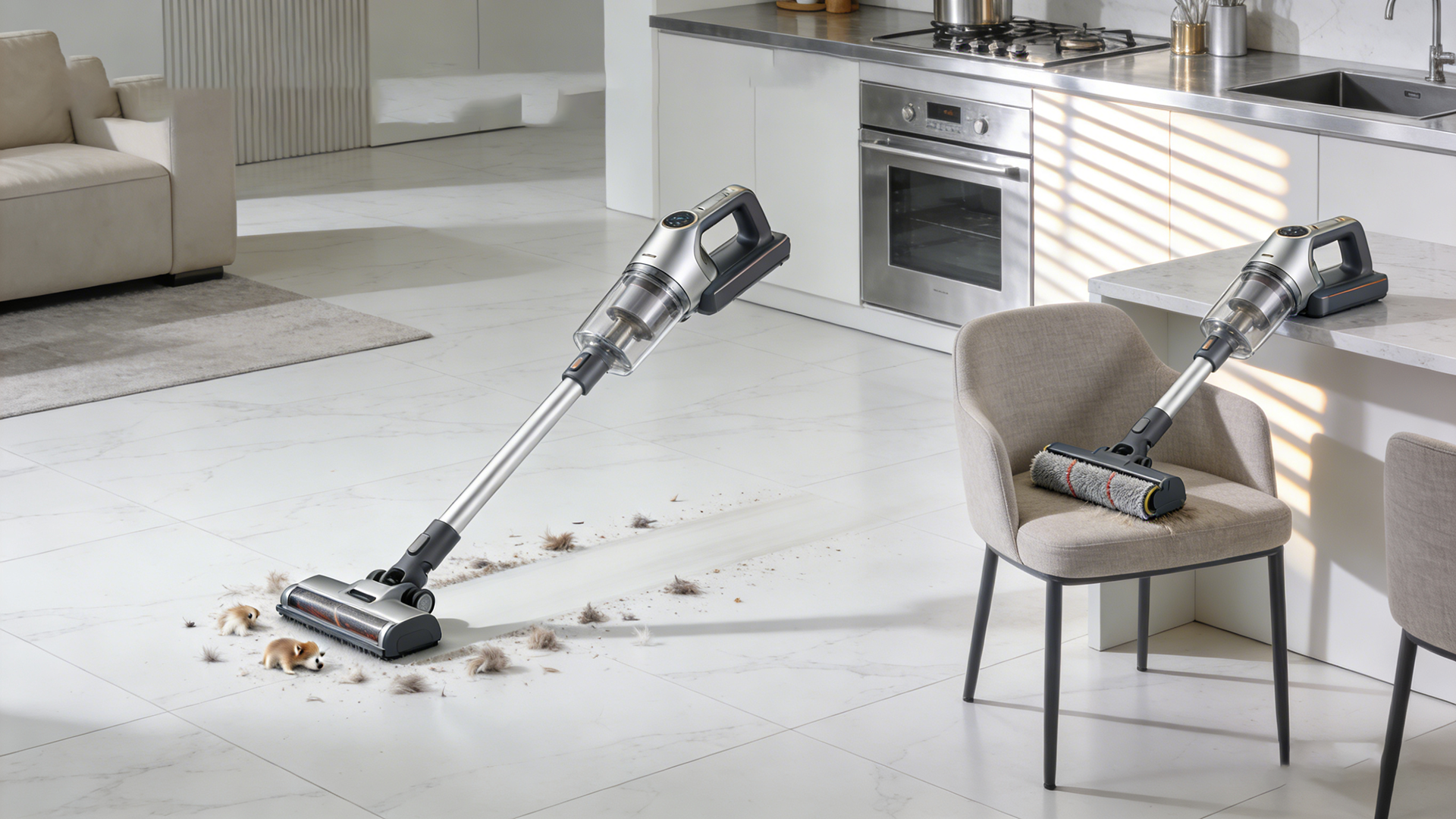
Residential use remains the largest and most dynamic segment in the global vacuum market, fueled by shifting consumer lifestyles and the rise of smart home ecosystems. Modern households—especially in developed markets like North America, Europe, and Southeast Asia—demand more than just basic suction power; they seek multi-functional units that can seamlessly handle diverse surfaces, from hard wood floors and tile to thick carpets and area rugs. Pet ownership trends have further amplified the need for specialized features: anti-tangle brush rolls, high-torque motors, and HEPA (High-Efficiency Particulate Air) filters that capture pet hair, dander, and allergens, addressing a key pain point for pet owners concerned about indoor air quality.
Beyond core cleaning capabilities, smart home integration has become a non-negotiable standard for premium residential vacuums. Features like laser dust detection— which illuminates invisible dust particles to ensure thorough cleaning— and self-emptying bases are now expected by discerning consumers. These smart functions not only reduce manual effort but also align with the global trend toward connected living, where users can control and monitor their vacuums via mobile apps, voice assistants, or home automation systems. For B2B partners targeting the residential segment, emphasizing compatibility with smart home protocols (such as Matter, the emerging universal connectivity standard) and multi-surface adaptability is crucial to capturing market share in this highly competitive space.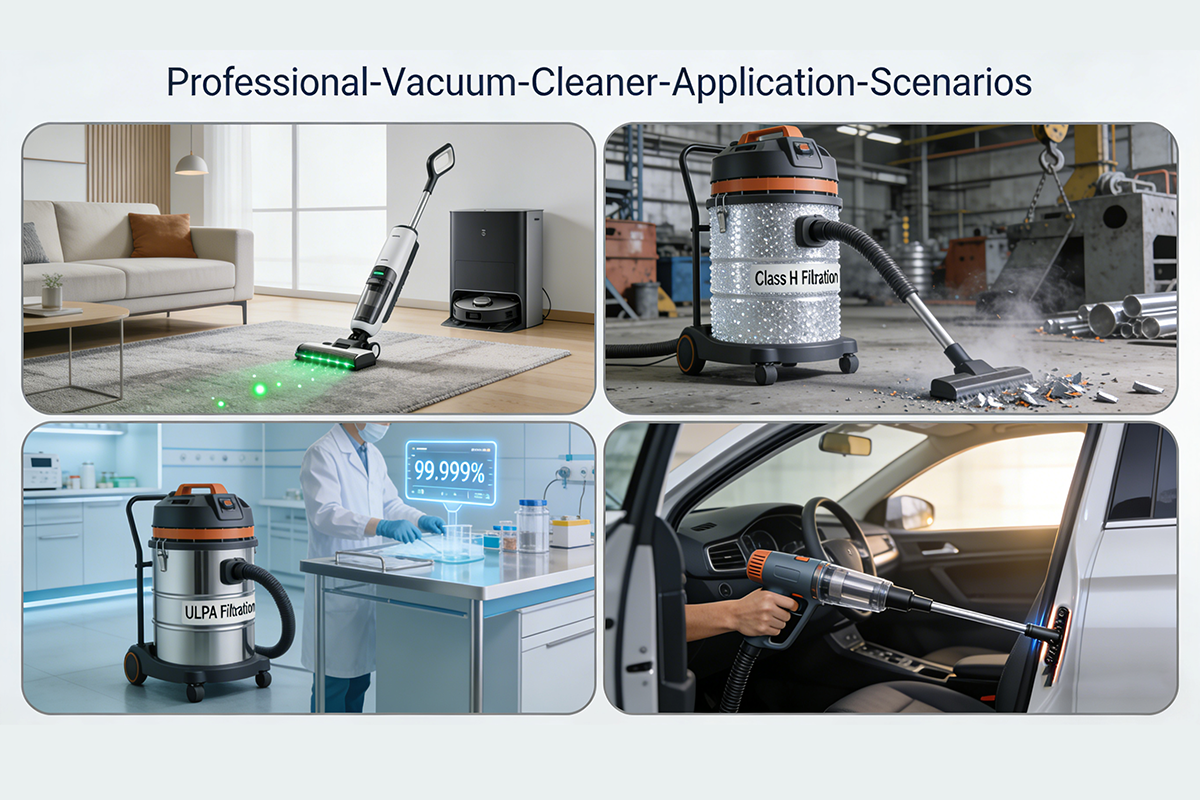
Industrial and Construction Sites: Heavy-Duty Performance for Hazardous Environments
Industrial and construction sites represent a high-stakes, high-demand segment where vacuums are not just cleaning tools but critical safety equipment. These heavy-duty applications require vacuums engineered to withstand harsh conditions, capture hazardous materials, and comply with strict occupational health and safety regulations. A key differentiator here is filtration classification: vacuums designed for industrial use must meet "Class M" or "Class H" standards. Class M vacuums are ideal for capturing fine dusts like concrete or wood dust, while Class H units— the highest level of filtration— are mandatory for handling highly toxic or carcinogenic substances such as silica dust, asbestos fibers, or metal shavings, common in construction, metalworking, and mining industries.
Beyond filtration, industrial vacuums feature robust, impact-resistant housing made from reinforced plastics or metal to withstand bumps, drops, and exposure to harsh chemicals. High-capacity canisters (ranging from 20L to 100L or more) minimize downtime from frequent emptying, a critical requirement for large-scale construction projects or continuous industrial operations. Portable, cordless models with long-lasting lithium-ion batteries are also gaining traction in this segment, allowing workers to move freely across job sites without being tethered to power outlets. For B2B suppliers catering to industrial clients, compliance with regional safety standards (such as OSHA in the U.S. or CE in the EU) and durability testing certifications are essential to building trust and ensuring product adoption.
Medical and Cleanroom Environments: Sterility and Precision as Non-Negotiables
In medical facilities, pharmaceutical labs, and electronic manufacturing cleanrooms, vacuums play a vital role in maintaining sterile, contamination-free environments— where even the smallest airborne particle can compromise product quality or patient safety. As such, vacuums for these applications must meet the most stringent filtration standards: ULPA (Ultra-Low Penetration Air) filters, which capture 99.999% of airborne particles as small as 0.12 microns, far exceeding the performance of standard HEPA filters. This level of precision is non-negotiable in pharmaceutical manufacturing, where cross-contamination can ruin batches of medication, or in electronic cleanrooms, where dust particles can damage microchips and sensitive components.
Beyond filtration, vacuums for medical and cleanroom use are designed with smooth, easy-to-clean surfaces to prevent the buildup of bacteria or debris. They often feature sealed systems to avoid air leakage, ensuring that captured contaminants are not re-released into the environment. Many models are also certified as "GMP (Good Manufacturing Practices) compliant," aligning with the strict quality control requirements of the healthcare and pharmaceutical industries. For B2B partners serving these sectors, emphasizing ULPA certification, GMP compliance, and sterile design is critical— as these credentials are the primary criteria for purchase decisions in highly regulated environments.
Automotive Detailing: Compact Power for On-the-Go Cleaning
The global rise of mobile car detailing services and at-home car care has created a booming niche for vacuums tailored to automotive applications. Unlike traditional vacuums, automotive detailing units must balance compact size with powerful suction, as they need to access tight spaces such as between car seats, under floor mats, and inside cup holders. Cordless models are preferred for their portability, allowing detailers to work without access to external power sources— a key advantage for mobile services that travel to clients’ homes or workplaces.
Specialized ergonomic attachments are another defining feature of automotive vacuums: narrow crevice tools for tight gaps, soft-bristle brushes for delicate dashboard surfaces, and rubber nozzles for capturing pet hair from upholstery. High-suction motors (often 150W or more) are essential for removing stubborn debris like sand, dirt, and food crumbs that accumulate in car interiors. Additionally, lightweight designs (under 3kg) reduce fatigue for detailers who use the tools for extended periods. For B2B partners targeting the automotive segment, focusing on portability, specialized attachments, and long battery life (40 minutes or more of runtime) is key to catering to the needs of both professional detailers and DIY car enthusiasts.
Conclusion: Aligning Products with Global Needs
The expanding application of modern vacuums reflects a global trend toward efficiency, safety, and customization. For B2B stakeholders, understanding the unique requirements of each segment— from smart home connectivity to industrial safety compliance— is essential to selecting and marketing the right products. By aligning product specifications with the specific needs of residential, industrial, medical, and automotive users, suppliers can not only meet market demand but also build long-term loyalty in a competitive global landscape. As vacuum technology continues to evolve, the ability to adapt to emerging application scenarios will remain the hallmark of successful players in the industry.
Ningbo Texous Electrical Appliances Co.,Ltd provides professional vacuum cleaners, steam cleaners & floor washers for global B2B clients. OEM/ODM expertise, ISO-certified quality, 100+ international customers. Request a quote today.
Zhejiang, Ningbo, Yuyao, MazhuTown, ZhubeiVillage, Emei Mountain, Bridge Road No.2, Texous Electric Appliances Co., Ltd.
Copyright © 2026 by Ningbo Texous Electrical Appliances Co.,Ltd Privacy Policy

 EN
EN



 Hot News