
 EN
EN




What is Production Lead Time in Vacuum Cleaner Manufacturing?
General Definition: Timeframe from Order to Dispatch
The production lead time is the time taken from when a customer places an order for a number of vacuum cleaners, to when the units are ready to be shipped. This encompasses processes such as manufacturing parts, conducting required tests, packing vacuum cleaners as well as the constant and unavoidable wait times. This begins from when the raw materials first come into the factory to when they are finally shipped. This does not include shipping time. The time taken for shipping when raw materials are required is a critical factor in order to manage factory capacity and respond to order requests. The Institute for Supply Management indicated in 2021 that companies had to wait 100 days on average to receive production materials, pinpointing the prominent flaws present in the supply chain.
The stages are Procurement, Subassembly, Final Assembly, Quality Control and Packaging.
Production of vacuum cleaners is well organized.
Procurement: Acquisition of key components, including brushless DC motors (lead times: 4–16 weeks), HEPA filters, and PCBs, from suppliers in varying locations.
Subassembly: Constructing functional modules (ex: brush roll systems and filtration housings) to simplify the complexity of the final line throughput.
Final Assembly: Combination of subassemblies and chassis, electronics, and power systems. Design choices affect cycle time.
Quality Control: Performance testing based on load (ex: suction decay testing, waterproof integrity testing), and more testing is performed by automated machine vision systems.
Packaging: Preparation of instruction manuals and accessories along with shipping cartons. This is often done with the completion of safety certification in order to reduce the time taken to complete the process.
Motor shortages will stall procurement and add sealing and corrosion testing on wet-dry models, while multi SKU models will result in changeover friction. Advanced manufacturers use parallel workflows (ex: packaging prep and compliance testing) to manage variability rather than treating each step as sequential.
First, what is affecting Vacuum Cleaner Manufacturer Lead Times
Motor, Filter, and PCB Acquisition, plus Supply Chain Issues
The impact of fragile supply chains remains significant for Vacuum Cleaner manufacturers, as they rely on numerous specialized and global components. These include brushless DC motors (mainly sourced from Asia), medical-grade HEPA filters, and custom circuit boards (PCBs) designed for very specific applications. Geopolitical tensions and local logistics disruptions can result in delays of several weeks (4-8 weeks) for all these components. One example of a supply chain issue is the semiconductor shortage of 2022-2023. Unassembled PCBs were a major contributor to a 30% increase in the lead time of major home appliance manufacturers. If there is a shortage of cyclone separator parts or lithium batteries, entire production lines can be stopped (completely) rather than just slowed down. It is possible to increase resilience against these disruptions by using suppliers that are closer to the manufacturing locations, but companies face the challenge of keeping quality control consistent across locations to avoid rework or product recalls.
Design & Assembly Complexity: Modular vs Integrated Chassis
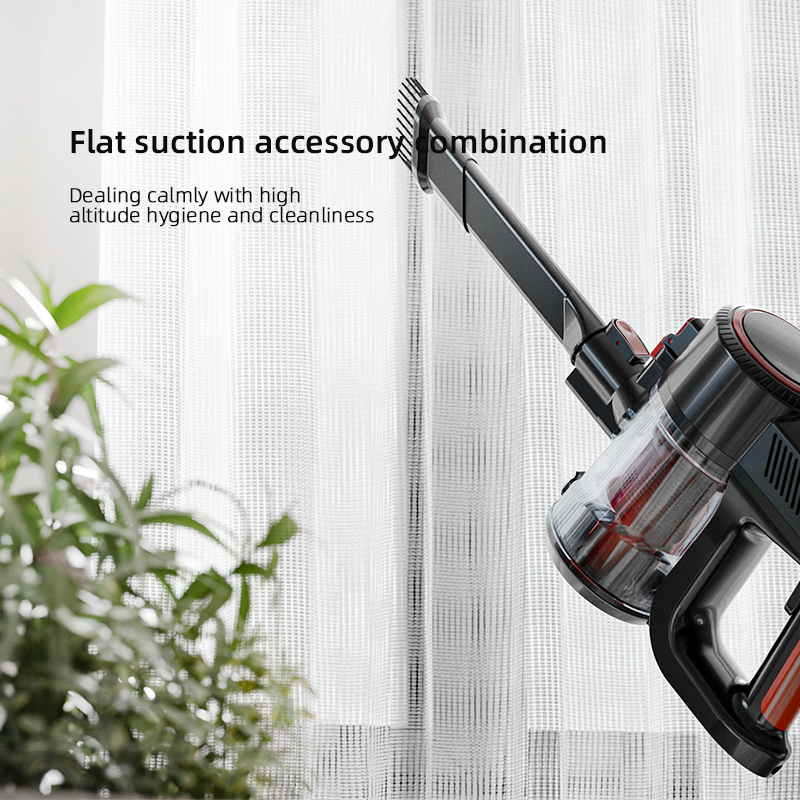
Design matters when it comes to ease of assembly and speed of assembly. Think of modular designs for example, where there are snap-in dust bins, tool-less removable brush rolls, and pop-out filters. These features may help maintenance and customer ease, but for every modular component, manufacturers need additional workstations to assemble them. This adds almost 25% to the footprint of the line and corresponding labor hours, and it increases the amount of engineering required to maintain tight tolerances. On the other hand, manufacturers with integrated chassis designs are able to keep more of the mounting features, reducing overall fastener use by 40% and reducing assembly time. We experienced this in our plant, where redesigning the connection between wands and handles eliminated eight minutes of build time per unit. The downside to this is that production lines with more than 15 different models experience more quality issues. Our analysis has shown that these mixed model lines experience quality control inspection times that are 17% longer than monomodel lines.
Why do we accrue more work each time we switch from corded to cordless units? Because we have to recalibrate machines, change each individual’s testing procedures, and complete extensive paperwork for each variation.
How Operational Strategy Affects Lead Time Deficiencies
Batch Size: Achieving Optimal Production and Avoiding Obsolescence
Manufacturers face many challenges, one being the balance of efficiency and the risk of potential loss. Larger production runs allow for a decrease in handling and production setup costs. A larger batch can decrease setup costs by 15% to 25% but excess inventory can quickly become obsolete. As an example, consider cordless tools with lithium-ion batteries. They become outdated and uncompetitive in a market shift of 18 months to something better. HEPA filters and rubber seals are similar. Businesses with excess inventory tie up cash and increase the risk of obsolescence before the parts can be used. Industry smart businesses consider three things when deciding on optimal batch size. They look for a steady demand, which is rarely longer than 6 months, actual shelf-life specs from suppliers, and the balance between efficiency and risk.
Third, they analyze the competition and the industry trends to forecast new technologies, instead of sticking to old habits.
Management of SKU Proliferation: Corded, Cordless, Robot, Wet-Dry Models Across Shared Lines
Most manufacturers currently deal with an average of over 12 different product types on a single line. Without managing this situation, it inevitably increases lead times. The largest potential issue is having to switch between different types of products. For instance, cleaning the line after working with wet products to dry products takes between 45 minutes and an hour and a half. Then there is the time-destroying offset to reprogram motor control settings when switching between products that are either cordless or corded. The type of back and forth described here, without proper management, can extend lead time by as much as 30 percent. The best-performing companies have developed a variety of techniques for overcoming these types of problems. The best-performing companies have developed a variety of techniques for overcoming these types of problems.
- Modular chassis architectures, enabling ¥70% component commonality across corded, cordless, and robotic variants.
- Sequenced production runs, grouping similar SKUs (e.g., all bagless or all lithium-powered units) to minimize tooling and test adjustments.
- SMED (Single-Minute Exchange of Die) protocols, reducing changeover time to ǿ15 minutes through standardized quick-release fixtures and pre-staged kits.The industry benchmarks show without losing configuration agility, the approach saves multi-model facilities 22% total lead time and reduces unique part numbers by 40%.
Best Practices for Vacuum Cleaner Manufacturers to Reduce Lead Time
Companies implementing lean practices noted actual cuts in all areas of their production cycles. The just in time approach is most effective when manufacturers provide forecasting data to their top suppliers. This means electric motors, printed circuit boards, and air filters arrive just in time for the assembly line to integrate them. No waste to storage due to surplus parts and no wasted time waiting for shipment. Last year’s Operational Resilience Council report states, 78% of manufacturing problems originate in the supply chain. Therefore supplier coordination is essential for a competitive edge.
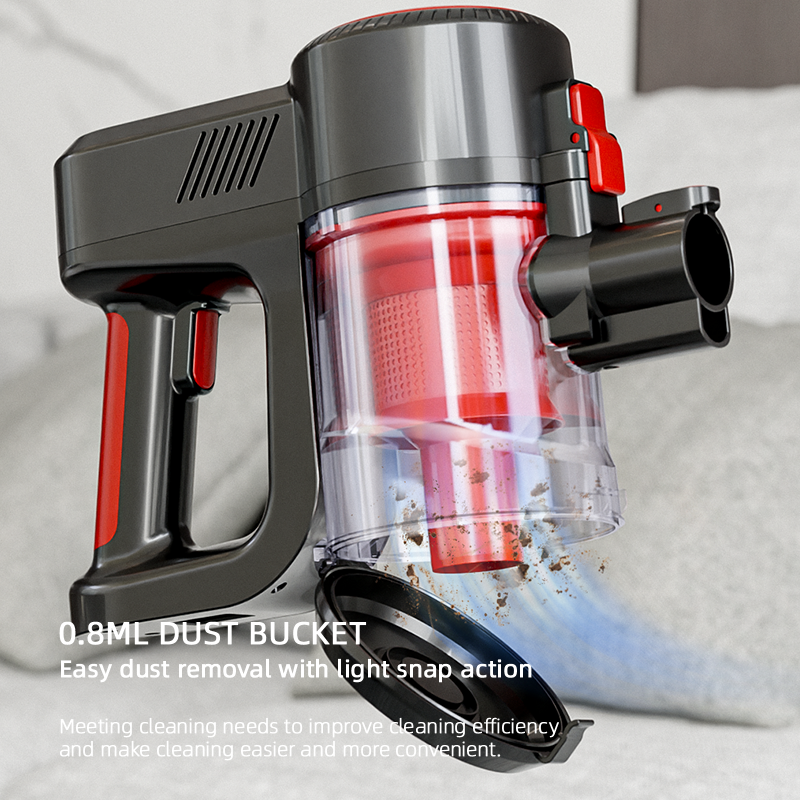
Ofelia’s expertise in the field of automation guarantees faster and consistent production. For example, with the machine vision system, solder-joint and seal-integrity inspections are 40% faster than the previous manual method. This is critical for wet-dry models, designed without waterproofing defects. Also, the modular chassis design allows the company to share production resources among different product lines. This reduces the changeover time and still maintains configuration agility.
The last thing to consider is intelligent scheduling: smaller, demand-driven Batches; real time detection of bottlenecks at subassembly stations; and cross-train techs rotating around work cells creates responsive capacity. When deployed together, these practices can achieve 30-50% reduction of total production lead time; while, still ensuring ISO 9001–compliant quality outcomes.
Questions and Answers about Vacuum Cleaner Manufacturing Production Lead Time
Q1. What is production lead time?
A: Production lead time is the total time taken from the moment an order is received and when the items are ready to ship. This includes the time taken to procure, assemble, test, and package the items.
Q2. Why is it important that manufacturers understand production lead time?
A: It is important for the efficient management of the capacity of the factory and to ensure that there is a quick response to the orders, which, in turn, improves customer satisfaction and the productivity of the organization.
Q3. What are the primary causes of the production lead time?
A: For example, the time it takes to acquire the various components, the design and assembly of the components, the optimization of the components into smaller batches, and the management of the proliferation of SKUs.
Q4. In what ways can businesses minimize production lead time?
A: Businesses can use a combination of lean practices to minimize production lead times, to include the optimization of batching, inventory management of SKUs, and improved collaboration with suppliers.'
Table of Contents
- General Definition: Timeframe from Order to Dispatch
- Motor, Filter, and PCB Acquisition, plus Supply Chain Issues
- Batch Size: Achieving Optimal Production and Avoiding Obsolescence
- Management of SKU Proliferation: Corded, Cordless, Robot, Wet-Dry Models Across Shared Lines
- Questions and Answers about Vacuum Cleaner Manufacturing Production Lead Time